Which Service Provides the Strongest Protection Against Rock Chips?

Driving on modern highways means facing an endless assault of loose gravel, road construction debris, asphalt fragments, and high-velocity stone strikes. For car owners who care about keeping their vehicle in pristine aesthetic condition, rock chips are one of the most frustrating and costly issues. A single pebble kicked up by a dump truck or passing SUV can gouge your bumper, crack your clear coat down to bare metal, and trigger corrosion.
When seeking an automotive protection solution, vehicle owners commonly encounter three popular options: Paint Protection Film (PPF), vinyl auto wraps, and ceramic coatings. However, there is widespread confusion regarding how much physical protection each service actually delivers against high-speed projectile impacts.
The definitive answer is clear: Paint Protection Film (PPF) is undisputedly the strongest and only purpose-built protection against rock chips. In this in-depth guide, we examine the material science, kinetic impact dissipation, and relative performance of PPF compared to vinyl wraps and ceramic coatings so you can choose the right defense for your vehicle.
Table of Contents
Jump directly to any section of this comprehensive service guide.
The Definitive Champion: Why Paint Protection Film Wins
When it comes to stopping rock chips dead in their tracks, Paint Protection Film (PPF) has no equal in the automotive aftermarket. Originally engineered for military applications to protect helicopter rotor blades from shrapnel and sand erosion during Operation Desert Storm, PPF was specifically created for high-velocity impact absorption.
Unlike cosmetic films or liquid treatments, PPF is manufactured from an advanced, heavy-duty thermoplastic polyurethane (TPU). This material possesses a unique molecular structure that combines immense tensile strength with high elasticity.
When a high-speed stone strikes a panel wrapped in PPF, the thick polyurethane layer compresses and absorbs the kinetic energy of the projectile, dispersing the force across the surface rather than allowing it to penetrate through to the paint.
Once the projectile bounces off, the elastomeric memory in the polyurethane rebounds to its original shape. As a result, the stone fails to crack your vehicle's delicate clear coat, leaving your factory paint completely unharmed underneath.
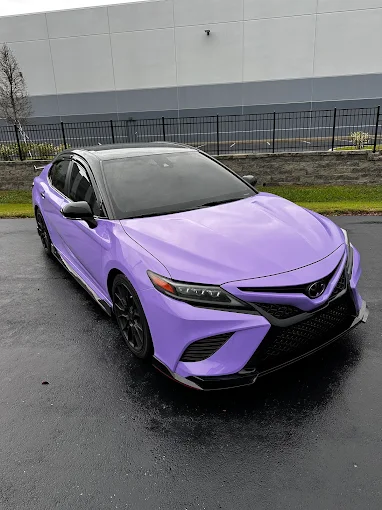
Material Thickness Breakdown: PPF vs Vinyl Wraps vs Ceramic Coatings
To understand why PPF outperforms all other alternatives against rock chips, you only need to examine the thickness of each protective layer. Thickness is the primary physical determinant of kinetic impact resistance.
Paint Protection Film measures between 8 and 10 mils (approx. 200 to 250 microns) thick. This includes an energy-dispersing TPU core, a self-healing elastomeric topcoat, and an ultra-durable acrylic adhesive layer.
Auto vinyl wraps, by comparison, measure only 3 to 4 mils (approx. 75 to 100 microns) thick. While vinyl provides adequate shielding against minor swirl marks, bird droppings, and UV fading, it lacks the dense mass and flexibility required to prevent sharp gravel from piercing through the film.
Ceramic coatings are the thinnest by a wide margin, measuring just 1 to 2 microns thick—less than 1% of the thickness of PPF. Because ceramic coatings are microscopic liquid crystal matrices that bond to clear coat pores, they provide zero physical cushioning against kinetic stone impacts.
Can Vinyl Wraps Stop Rock Chips? The Reality Explained
A common misconception among car enthusiasts is that installing a full vinyl wrap will safeguard their factory paint against highway rock chips. While a vinyl wrap is certainly better than bare clear coat, it is not engineered as impact armor.
Vinyl films are made of polyvinyl chloride (PVC), a material optimized for stretchability, conformability, and aesthetic color reproduction. Under high-speed projectile strikes, PVC does not compress and rebound like polyurethane; instead, sharp rocks easily tear, puncture, or split the vinyl.
When a rock punctures a vinyl wrap, two negative outcomes occur. First, the projectile often carries enough leftover kinetic force to chip the underlying paint anyway. Second, the vinyl wrap itself is permanently torn, leaving an unsightly puncture hole that cannot self-heal.
If you love the custom styling of a vinyl wrap but want rock chip defense, the industry best practice is to install clear PPF over high-impact areas of the wrap, such as the front bumper, to prevent the vinyl from tearing.
The Role of Ceramic Coatings: Why They Cannot Stop Rocks
Ceramic coatings have gained massive popularity for their extreme gloss, hydrophobic water-beading properties, and slickness. However, marketing claims sometimes mislead owners into believing ceramic coatings form an impenetrable ceramic shield against all road hazards.
A ceramic coating is an inorganic liquid resin composed of silicon dioxide (SiO2) or ceramic nanoparticles. When cured, it hardens into a microscopic glass-like layer that bonds chemically to the vehicle's clear coat.
While ceramic coatings offer an impressive 9H pencil hardness rating, hardness is not the same as impact resistance. Glass is hard, yet it shatters upon impact. Similarly, a microscopic 2-micron ceramic coating cannot absorb the heavy kinetic energy of a stone traveling at 70 miles per hour on the highway.
Ceramic coatings are exceptional for resisting UV fading, preventing chemical etching from bug splatter, and making car washes effortless, but they provide virtually zero protection against physical rock chips.
Self-Healing Polymers: Erasing Scratches and Scuffs Automatically
Beyond absorbing major rock strikes, premium Paint Protection Film possesses an innovative feature that neither vinyl wraps nor ceramic coatings can match: thermal self-healing technology.
The clear coat layer of modern PPF is formulated with elastomeric polymers that retain a permanent molecular memory. When minor rocks, road sand, wash brushes, or debris create surface abrasions and swirl marks, the polymers merely shift out of alignment.
When the film is exposed to heat—such as the natural radiant heat of the Florida sun, warm water, or a gentle heat gun—the polymers soften and flow back into their original smooth alignment. Within minutes, the scratches and scuffs disappear entirely.
This self-healing capability ensures that your vehicle's front end remains free of swirl marks, hazing, and stone scuffs, preserving a showroom-gloss appearance year after year without recurring polishing.
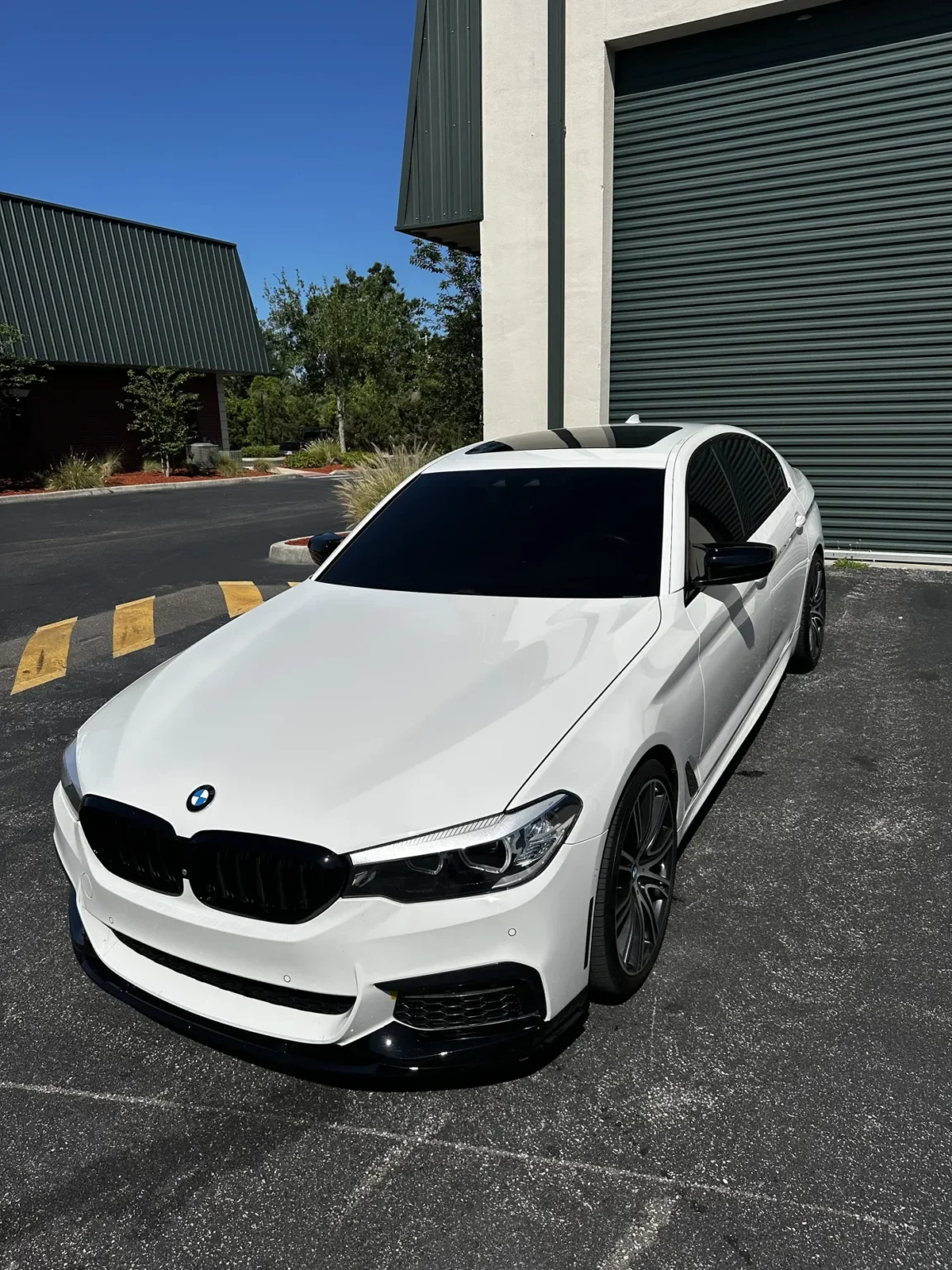
Recommended Coverage Strategy: Maximizing Protection and Budget
While covering your entire vehicle in paint protection film provides the ultimate bumper-to-bumper defense, you can achieve maximum rock chip protection by strategically focusing on high-risk impact zones.
Statistical highway impact data shows that over 85% of all rock chips occur on the front-facing surfaces of the vehicle. Therefore, investing in a Full Front PPF package provides the ideal balance between comprehensive protection and cost efficiency.
A Full Front installation covers the entire front bumper, complete hood, full front fenders, side mirror caps, and headlights. By wrapping the entire hood rather than a partial strip, there are no visible lines across your paint, delivering a seamless aesthetic.
For vehicles driven frequently on highways, trucks with large tires, or sports cars with wide rear fenders, adding extended rocker panels and rear splash guards will protect vulnerable lower body panels from gravel kicked up by your own tires.
The Ultimate Hybrid Setup: Combining PPF and Ceramic Coating
Rather than choosing between Paint Protection Film and ceramic coatings, modern automotive detailing professionals recommend combining both technologies to create the ultimate defense package.
In this hybrid strategy, premium self-healing PPF is installed on all high-impact front-facing surfaces to absorb highway rock chips, road gravel, and projectile impacts.
Next, a professional-grade ceramic coating is applied over the entire vehicle—including on top of the PPF itself as well as unprotected rear panels, glass, and wheels.
The PPF provides the heavy kinetic armor against physical stone chips, while the ceramic coating adds extreme hydrophobic slickness, UV resistance, and chemical stain prevention. This synergistic combination keeps your car clean, shiny, and completely protected against all road hazards.
Contact Us Today
Have questions or need emergency service? Reach out to our dedicated team anytime.
SS WRAPS & TINTS
Fast, dependable support and honest pricing across our service area.
Frequently Asked Questions
Find clear, helpful answers to common questions regarding our process, pricing, equipment, and satisfaction guarantee.
Can a rock chip penetrate completely through paint protection film?
Does a vinyl wrap provide enough protection against rock chips?
Can ceramic coatings prevent rock chips on highway driving?
Which areas of the vehicle suffer the most rock chip damage?
Can you apply PPF on top of a vinyl wrap?
How does heat heal scratches on paint protection film?
Related Articles
Protection Film Services in Oldsmar, FL
Paint Protection Film Services in Oldsmar, FL | Clear Bra PPF
Read Article →Auto Wraps in Oldsmar, FL
Auto Wraps in Oldsmar, FL | Vinyl Color Change & Commercial Fleet Graphics
Read Article →Window Tinting Services in Oldsmar, FL
Window Tinting Services in Oldsmar, FL | Nano Ceramic Window Films
Read Article →